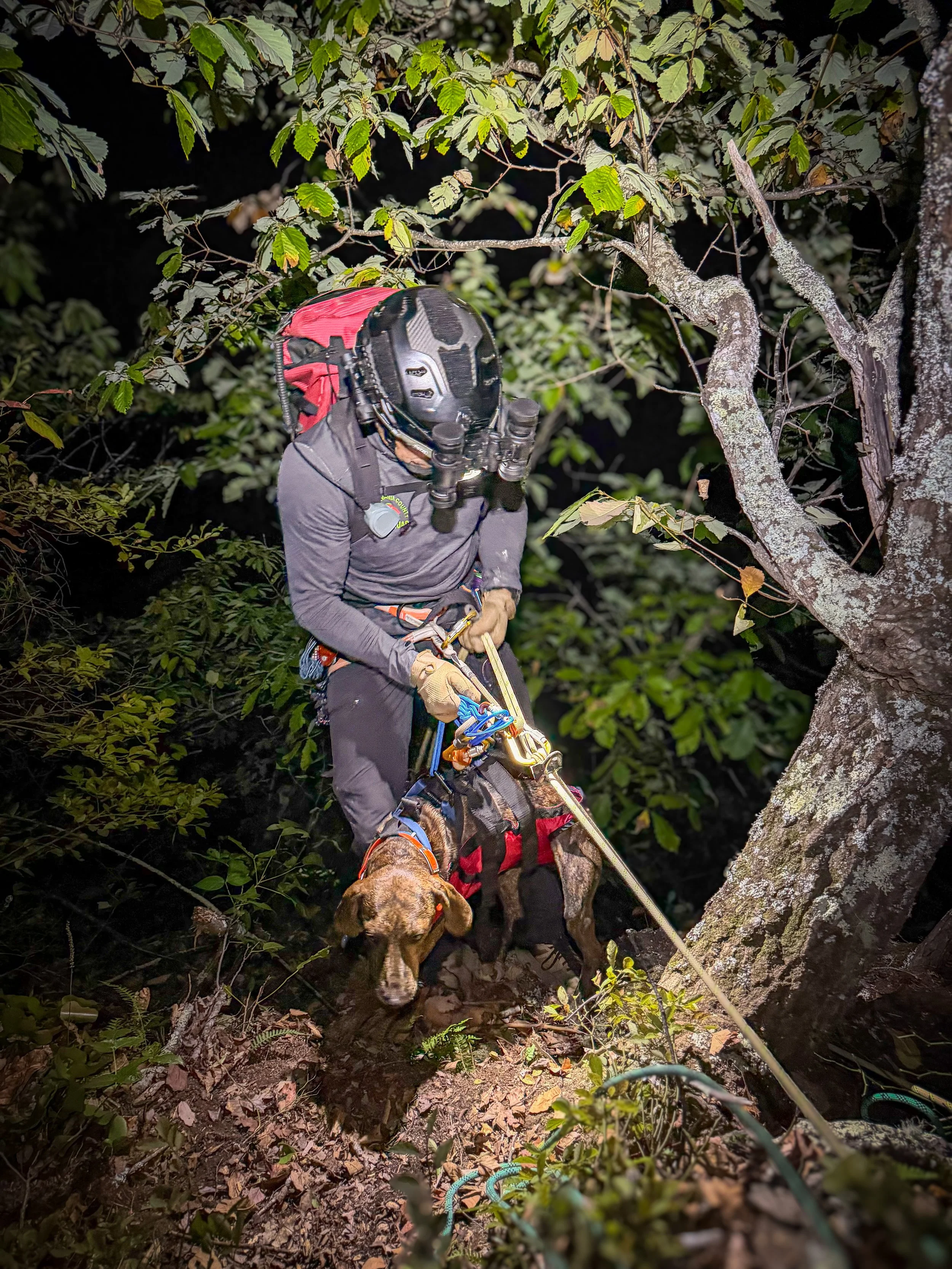
Last week a hunting dog spent three days on a ledge on Ramsey Cliff, outside Franklin. It’s bear season, and somewhere in the chase he’d ended up about 200 feet up a rock face his owner couldn’t reach. Other groups had tried to get to him. None could.
The owner walked three of us from Pisgah Climbing School in from the end of a 4x4 trail, along with a local who knew the way and had tried to reach the dog the day before. We hiked in and scrambled about a hundred feet of steep ground. By then it was already dark. I racked up and led two pitches of technical rock on cams in the dark to reach the ledge. Three tandem rappels later he was on the ground, unhurt, and walked out on his own feet to the owner waiting at the bottom. The Charlotte Observer covered the rescue.
I’ve done well over ten dog rescues in twenty years. That was the most technical one. But it isn’t the call I keep thinking about this week.
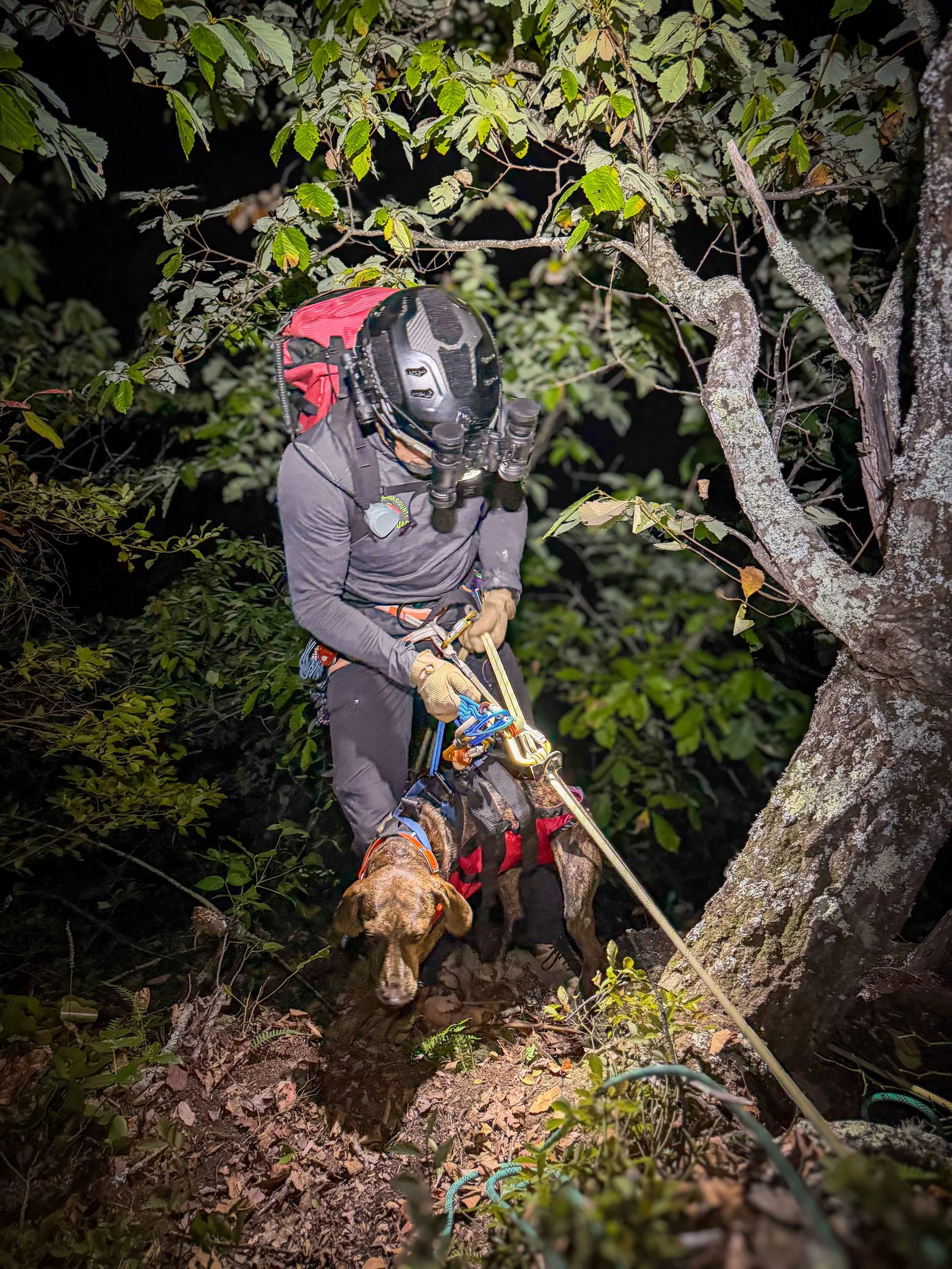
“Getting ready to lower him off Ramsey Cliff. Three tandem rappels in the dark, and he walked out unhurt.”
The call I wasn’t on
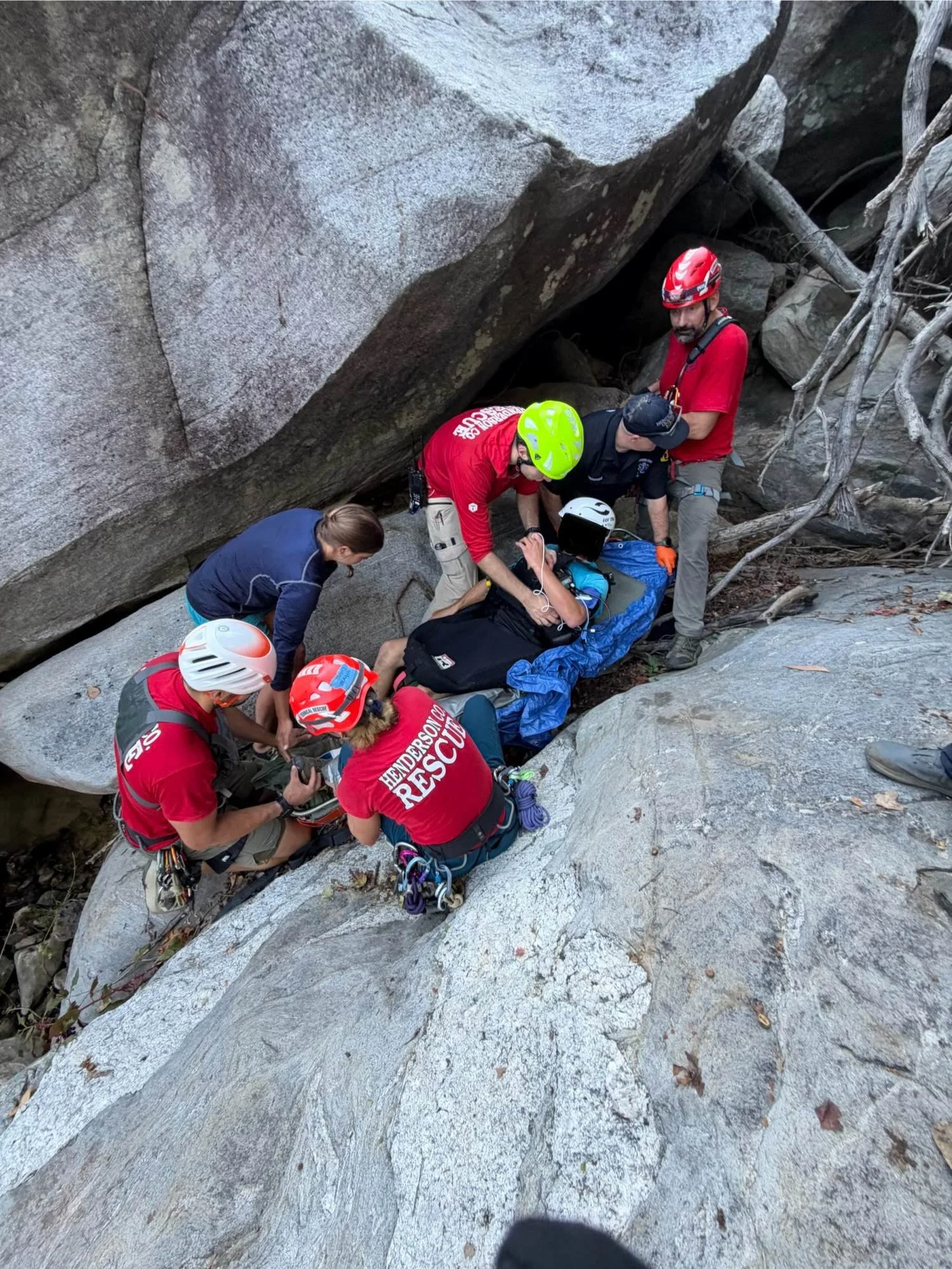
While I was away at the Arc’teryx Pro Summit, my phone rang. A team had gone out on a mutual aid call, and when they got to the trail, they split into two parties. The first group ran. The second group jogged. When they realized they needed more gear, two rescuers ran back to command and then ran back to the patient again. Nobody told them to move like that. Nobody wrote anybody up afterward. It was just how you do it.
Five years ago that wouldn’t have happened. Ten years ago, I was the guy getting called crazy for doing exactly that. I was climbing professionally back then and training like it, so covering ground efficiently in the mountains was normal for me. My comfortable pace is a run, and I can hold it all day. To a lot of people on the squad, that looked reckless. I was told I shouldn’t go into the woods by myself, because of every what-if anyone could come up with. My favorite was: what if a tree falls on you?
Why slow made sense
I want to be fair to the way things were. Rescue culture taught “walk, don’t run” for real reasons. A rescuer who shows up too winded to work, or rolls an ankle on the way in, becomes a second patient. Big teams and heavy systems, everything carried in and set up deliberately: that model is built for control, and control saves lives. The people who pulled me aside weren’t wrong to care about that.
What the mountains taught me
But I came to rescue from guiding, and in the mountains efficiency is safety. Less time exposed. More daylight. A patient who gets care sooner. None of that comes from hurrying. A guide moves at a pace they can hold all day, not out of breath, with enough left to think and to work on arrival. It just happens that for someone fit who moves well on steep ground, that pace is faster than most people would believe. The rest comes from running your systems so many times they get boring.
Rescue has a favorite saying: slow is smooth, smooth is fast. I’ve never liked it. I understand the idea. Slow down so you don’t make mistakes, and you’ll end up faster. But slow is slow. If you aren’t already efficient, slowing down doesn’t make you smooth. It just makes you slower than slow. Smooth comes from practice, not from slowing down, and efficiency is what’s actually fast.
Efficient isn’t reckless. Reckless is showing up winded and making mistakes. The dog on Ramsey Cliff came off the ledge because three people could climb, not because we brought shiny equipment. And the patient’s clock starts when they get hurt, not when we reach the trailhead.
That’s also why rescue is woven into how we run Pisgah Climbing School. The three of us who climbed on Ramsey Cliff were PCS guides. The skills that got that dog down, leading on gear, building anchors quickly, and running tandem rappels in the dark, are the same ones we teach all the time in our climbing and self-rescue courses. Guiding keeps those skills sharp in a way a few training nights a year can’t. Rescue keeps us honest about why we teach them.
How it changed
When I joined the Transylvania County Rescue Squad in 2007, the squad was full of good people who showed up for their community, and the culture fit the crew we had. A lot of us weren’t in the kind of shape that steep ground demands, so running to a patient wasn’t realistic, and the risk management followed: move slow, stay together, never go alone. If a call was somewhere the ATVs couldn’t reach, everyone understood it was going to take a long time.
Today I serve as the squad’s Technical Director of Mountain Rescue, and the roster looks different. We have members who run 50Ks on a regular basis. We have a newer e-MTB team, and everyone on it is a mountain biker. We have more guides on the squad than we’ve ever had. And our hasty teams are actually hasty. They get to patients fast.
None of that happened quickly. Early on, I got in trouble for saying that it takes ten years to make a rescuer a climber and two weeks to make a climber a rescuer. I’d say it more gently now, but I still believe it, and I’m not alone. I’ve had a rescue chief tell me he agrees. Rope systems can be taught fast. Experience and years of moving through steep terrain can’t. So we brought in people who already moved well in the mountains and trained them in rescue, and we kept doing it until it stopped being my way and became the team’s way.
That’s where rescue is heading. Not seventy-five people in the woods, but a small team that’s fit and technically sharp and gets there first. Four people got that dog off Ramsey Cliff. Big crews still matter for long carry-outs and wide searches. But the first people to reach someone should be the ones who can cover ground efficiently, arrive with something left, and solve the technical problem when they get there.
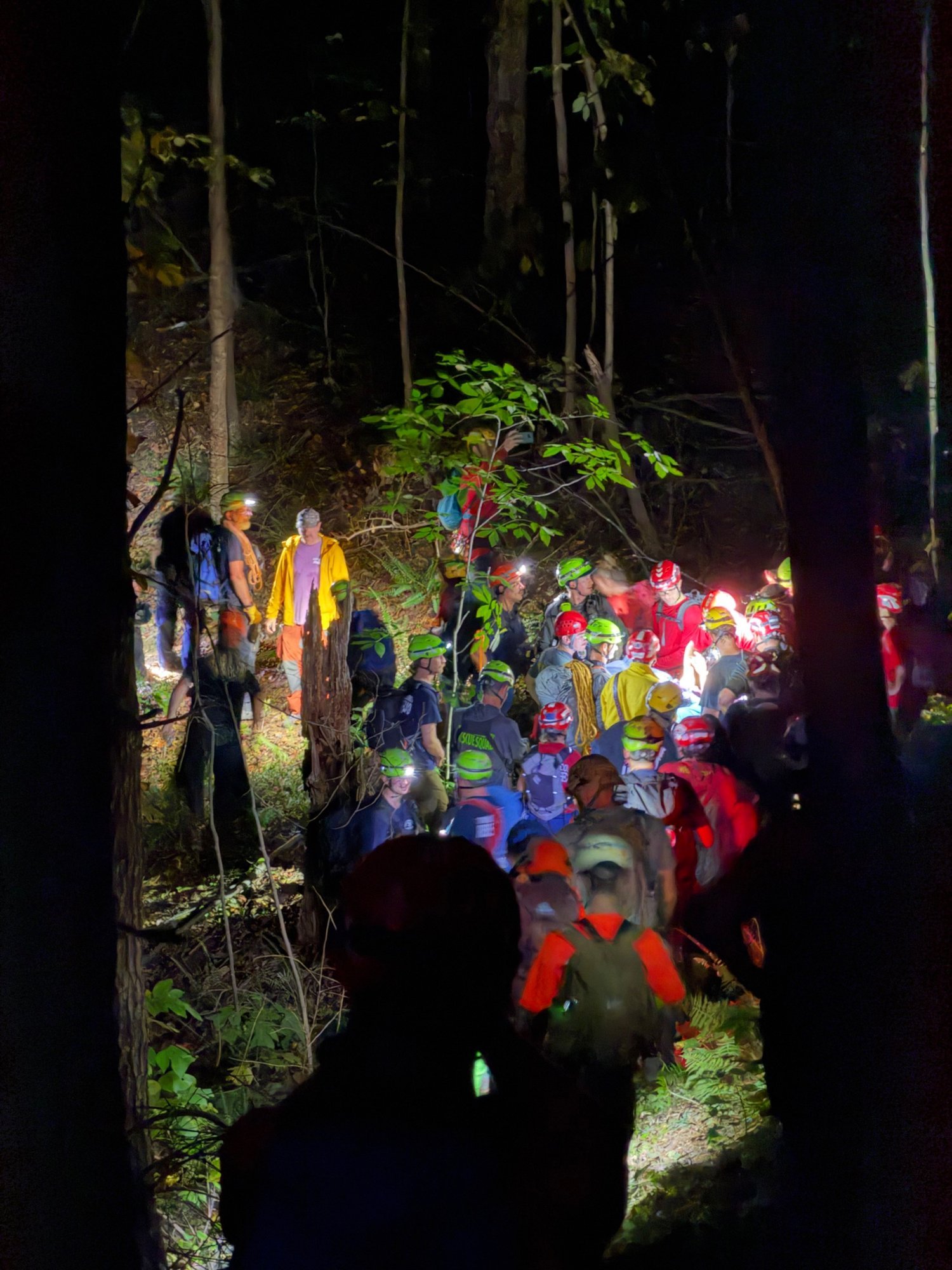
Large group of rescuers in helmets and headlamps carrying a litter through the woods at night in Western North Carolina.
It takes 20 years
This is my twentieth year on the Transylvania County Rescue Squad. I used to think a culture changed when you won the argument. It doesn’t. It changes when the people you trained start training other people, and the thing you once got in trouble for becomes the thing nobody notices.
That team didn’t jog to their patient because of me. They did it because it’s normal now. That’s the part that took twenty years, and it’s the best thing I’ve been a part of.
The squad and Pisgah Climbing School are different worlds, but leading them has turned out to look a lot alike. Teach people to move well in steep places. Practice until it’s boring. Then trust them to do it when it counts, whether that’s a client on a multi-pitch route, a teammate on a mutual aid call, or rappelling with a hunting dog 200 feet up.