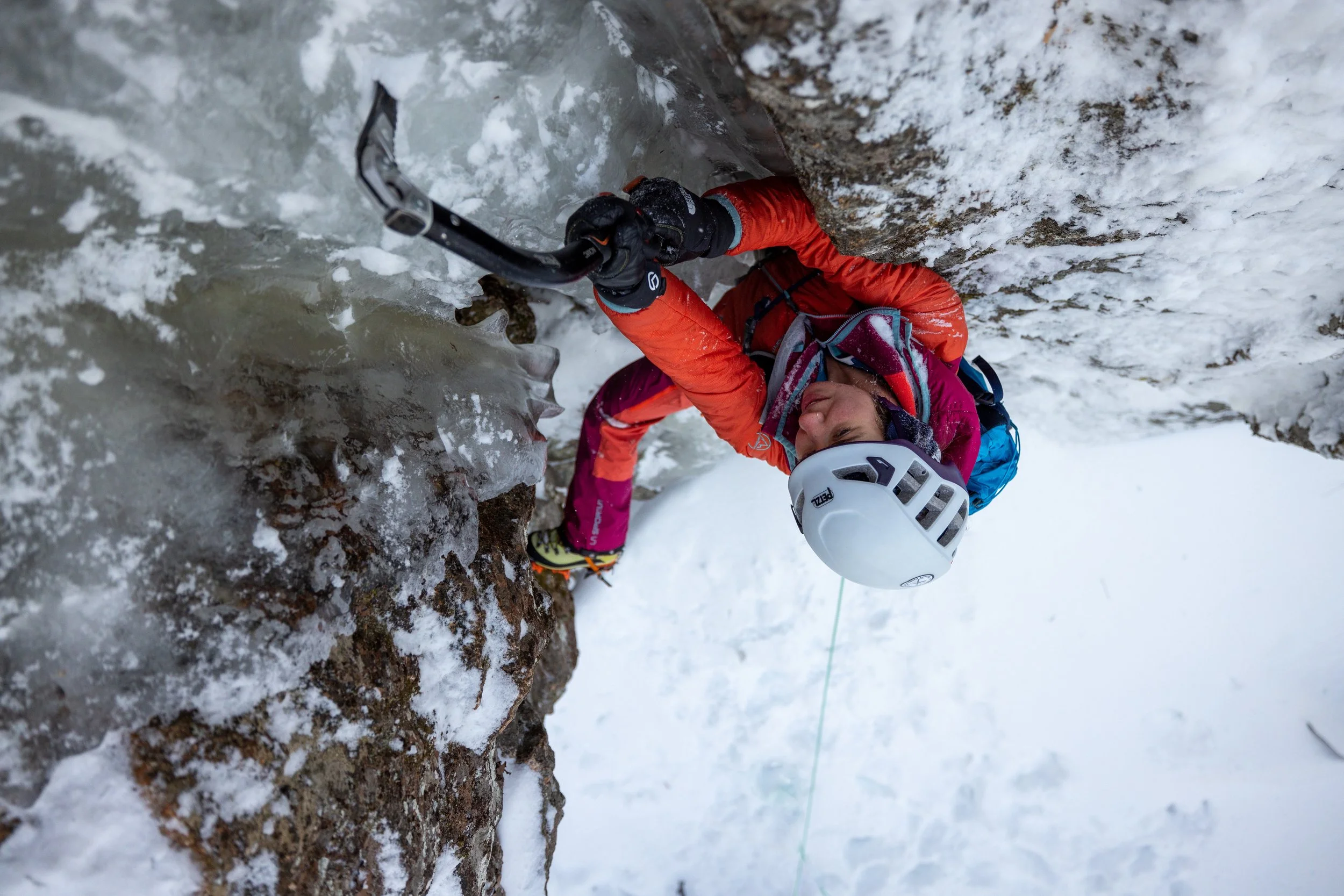

I have been using the GriGri for many years in my guiding as well as my personalclimbing pursuits. It was a game changer when it came out. Now that Petzl GriGri 2 has come out, it seems to be a game changer as well. It is 25% smaller and 20% lighter than the original GriGri. This has made me not even think twice on carrying it in multi-pitch terrain. It preforms great for lead belaying as well as for belaying off top anchors. Descending is still tricky even with small ropes. The Frieno carabiner works well for this with its friction spur to add a little grab without burning those hands. There is an issue with the rope getting caught behind the camming device. I have been unable to replicate this in a real situation but it is very possible. Petzl is aware of this issue and has said that no problems should arise. The fix for this is to pull down on the break end of the rope which will allow the the load strand to come back around the cam. Seems easy enough.

HDR Photography
High dynamic range photography is a form of photography that allows different levels of light in pictures to be put together into one image to give a scene a more real, and sometimes surreal, look. Usually one will take three or more images with one being overexposed, one underexposed, and one at the correct exposure. These images are then put into a program to render them together. I have been using Photomatix pro to render my images, but this is also possible with programs like Photoshop.


Black Diamond C3's
Ron climbing "Waste Not, Want Not". 5.12c R

Folks always wonder why we choose Black Diamond cams over all the other brands on the market. This video says it all, though there are many other reasons I choose to clip C3’s.
Practicing Rescue
Some guides practicing rescue. Yes, this is what we do at night…
New River Rendezvous '11
About this time every year, Lindsay and I head to the New River Gorge for the annual New River Rendezvous to teach a few clinics and promote Fox Mountain Guides. The enjoyment for us really comes in meeting up with old friends as well as making a few new ones! I think we sometimes spend more time chatting with friends from NC than we ever do when we are in Brevard.
While we did get some good food, I was lucky enough to pick up some food poisoning – nothing that could keep me down – just felt like really bad altitude illness without the ability to go any lower to get better.
We put on two different clinics this year, an advanced rescue clinic as well as a beginning climbers clinic. Both went really well, and folks were psyched afterwards!
It was also the Access Fund’s 20th birthday, so people were way hyped-up about that and carried that energy throughout the festival. Here are some more photos of friends and the festivities!


Easton Hat Trick

The super-light Easton Hat Trick is a great tent for one to three people looking for a light, strong, and reliable shelter in many different environments. I just got done using this shelter in the extreme conditions on Mt. Whitney. The first night in the tent we had 70 mph gusts of wind and blowing snow. At one point, a tent pole bent down and hit my head as I was laying there. In the morning when I awoke, every single piece of the tent was intact! Other tents on the mountain were rendered useless – not the Hat Trick.
One of the cool things about the Hat Trick is the pole system. Easton calls this the “air lock” system. I was a bit skeptical at first sight, but after using these poles, I am a believer. One thing you won’t be skeptical about will be the weight of the poles. They are SUPER light! This keeps the entire tent weight well below 7 lbs. This is really light for a three-person tent.
The only downside I found was that Easton calls this an all-season tent. While the tent did do a great job holding its ground in the high wind, the mesh inner let snow blow into the tent. The mesh provides for great ventilation, but hard to call this a complete “all season” shelter.
If you are looking for a high-end, super-light shelter that is reliable, I would suggest throwing a Hat Trick in your pack. You might not even know it is there!

AAC Rescue Course and Climbing Day
As the Ambassador for the American Alpine Club in the Western Mountains of North Carolina, I set up a few events every year for the local members. One of them is a free rescue course at Fox Mountain Guides. This year we had fourteen AAC members and four Fox Mountain Guides attend this event. We started out the day with some coffee and donuts and then quickly moved into looking at ways to keep our climbing systems quick and efficient to keep ourselves out of trouble. We also looked at the gear museum that FMG has on hand with old bolds and broken gear.
After lunch, we went to Looking Glass and folks split up practicing rescue techniques as well as getting some climbing in. Check out the photo gallery here: AAC Photos.

The Warriors Way

Arno Ilgner is quite the legend in southeastern rock climbing. He has been putting up “hard man” routes since the early 80’s. He has also delved into mental training and wrote the book “The Rock Warriors Way,” followed by “Espresso Lessons” about a year ago. Now Arno travels the country teaching the way of the warrior in his clinics.
Arno always smiling!
I was fortunate enough to take this training with my fellow employees of Fox Mountain Guides. The training made me realize I am not very present in the moment when I am climbing. I was already familiar with and had practiced most of the teachings and techniques Arno advocates in his clinics. The problem with guiding is that we rush through climbing to get the rope up. This tends to spill over into our recreational climbing as we are always reinforcing this hurried movement into our brains. Arno says this is a more intuitive approach, and focusing on a more analytical way of climbing will balance out our movement. Stopping and thinking during climbs was hard for some of the guides and made typical “cruiser” terrain somewhat difficult at first. Once you learn to rest when you rest, and climb when you climb, you start to feel more like a warrior on the rock.
Check out Arno’s site here: http://warriorsway.com/


Training the Special Forces
Training the Special Forces is a great privilege. These men are super dialed and pick up on any thing we teach them. We take them from never being in a climbing system to leading multi-pitch climbs in just a matter of days. From blasting up trails to holding their fear back on the runout leads, these guys are incredibly smart and well-conditioned machines. The group that I just worked with last week was nice enough to let us take a few shots during their training.


Technical Rescue Training

At Fox Mountain Guides, we do a lot of continuing education and training for our guides to stay on top of what is out there in the climbing world. Technical rescue is something we hopefully never have to use but need to be very proficient with……. just in case. I do find myself employing these techniques when guiding to make my clients’ experience better as well as during high angle operations with the Brevard Rescue team. Nonetheless, revisiting these systems is always good and discussing with peers ways to do things better seems to keep us at the forefront of our industry.

We use the AMGA “45 minute drill” as our scenario. This scenario is a technical challenge that guides must complete to pass their AMGA Rock Instructor and AMGA Rock Guide exams. They don’t really reflect actual situations one might encounter, and they are not inteded to. The drill is designed to be complex, stressful, and contrived to evaluate how a guide might deal with an even more stressful emergency. It consists of escaping belays, raising and lowering systems, rappelling and counter balancing descending techniques, as well as improvised ascending and load-releasable weight transfers. This scenario brings out various solutions to many different problems, which allows for great discussion among scholarly guides.
